
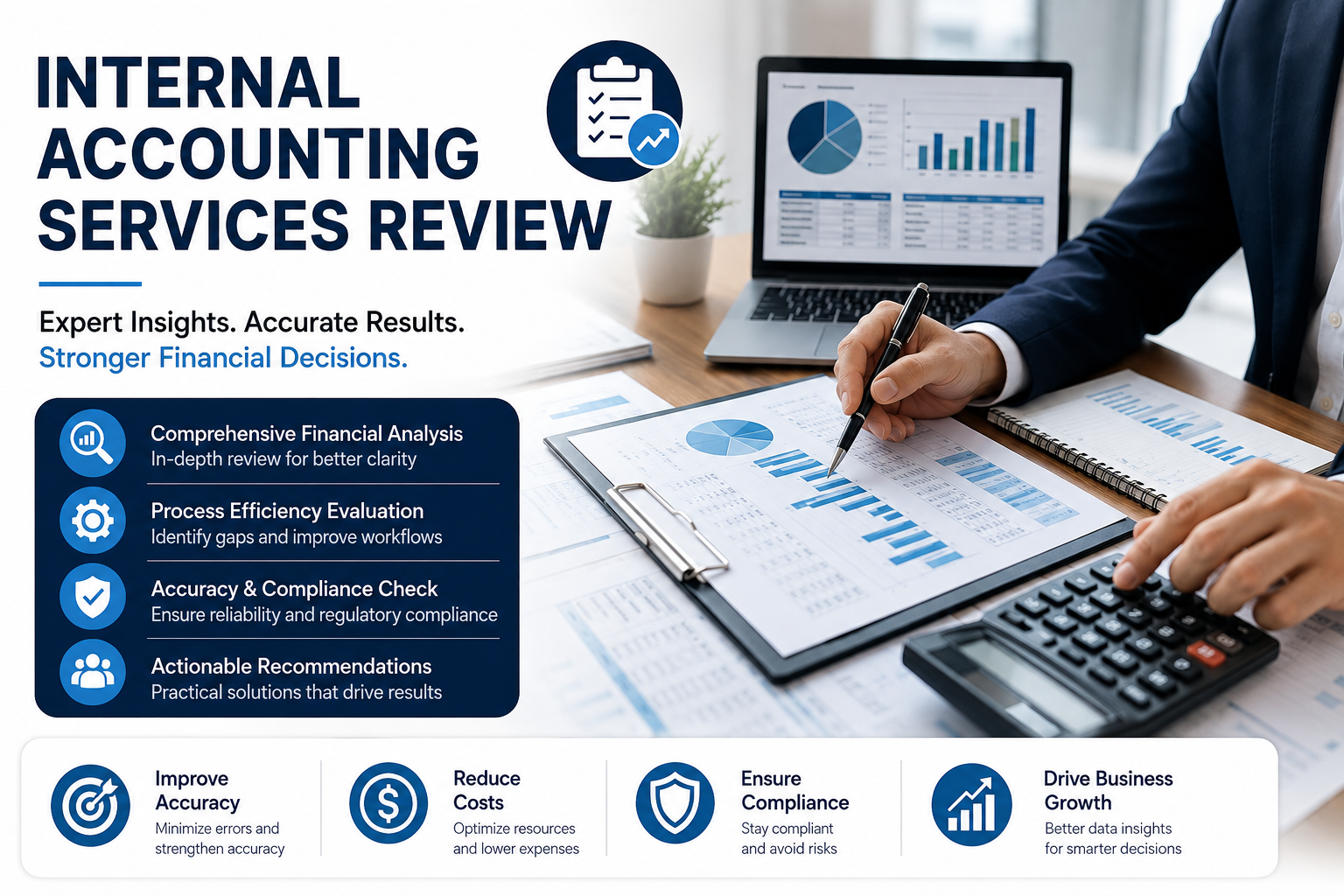
Internal Accounting Services play a crucial role in managing the financial health of any business, whether it is a startup, SME, or large enterprise. In today’s competitive market, businesses need accurate financial records, real-time reporting, and compliance with regulatory standards. This is where internal accounting services become essential. These services ensure that all financial activities within an organization are properly tracked, analyzed, and optimized for better decision-making.
In simple terms, internal accounting services involve handling day-to-day financial operations within a company. From bookkeeping and payroll to financial reporting and budgeting, these services help businesses maintain transparency and control over their finances. Companies that invest in strong internal accounting services often experience better financial planning, reduced risks, and improved profitability.
Internal accounting services refer to the financial processes and systems managed within an organization to monitor and control its financial activities. These services are typically handled by an in-house accounting team or outsourced professionals who act as an internal department.
The main objective of internal accounting services is to ensure that all financial transactions are recorded accurately and in compliance with accounting standards. These services also help in identifying financial discrepancies, managing expenses, and providing insights into the company’s financial performance.
Businesses rely on internal accounting services to maintain financial discipline and ensure smooth operations. Without proper internal accounting services, companies may face issues like mismanagement of funds, compliance risks, and inaccurate financial reporting.
Internal accounting services consist of multiple financial functions that work together to manage the company’s finances effectively. Each component plays a vital role in ensuring financial stability and growth.
Bookkeeping: This involves recording all financial transactions such as sales, purchases, receipts, and payments. Accurate bookkeeping is the foundation of internal accounting services.
Financial Reporting: Internal accounting services include preparing financial statements like balance sheets, income statements, and cash flow statements. These reports help businesses understand their financial position.
Payroll Management: Managing employee salaries, bonuses, deductions, and tax compliance is another critical part of internal accounting services.
Budgeting and Forecasting: Internal accounting services help businesses plan their future finances by creating budgets and forecasting revenue and expenses.
Tax Compliance: Ensuring timely filing of taxes and adherence to government regulations is a key responsibility under internal accounting services.
There are numerous advantages of implementing internal accounting services in a business. These benefits go beyond simple financial management and contribute to overall business growth.
Improved Financial Accuracy: Internal accounting services ensure that all financial data is accurate and up-to-date, reducing the chances of errors.
Better Decision Making: With detailed financial reports, businesses can make informed decisions regarding investments, expenses, and growth strategies.
Cost Control: Internal accounting services help monitor expenses and identify areas where costs can be reduced.
Regulatory Compliance: Businesses can stay compliant with tax laws and financial regulations through efficient internal accounting services.
Fraud Prevention: Proper financial monitoring and internal controls reduce the risk of fraud and financial mismanagement.
In today’s dynamic business environment, having strong internal accounting services is no longer optional—it is a necessity. Businesses of all sizes require accurate financial management to survive and grow.
Small businesses need internal accounting services to manage limited resources effectively. Medium and large enterprises rely on these services to handle complex financial operations and ensure compliance with various regulations.
Internal accounting services also provide transparency in financial operations, which builds trust among stakeholders, investors, and customers. Companies that maintain proper internal accounting services are more likely to attract investments and achieve long-term success.
Many businesses often compare internal accounting services with outsourced accounting to determine the best approach for their needs.
Internal accounting services involve having a dedicated team within the organization. This allows better control, real-time monitoring, and quick decision-making. However, it may require higher costs for salaries and infrastructure.
On the other hand, outsourced accounting services are handled by external agencies. While this can be cost-effective, it may lack the same level of control and immediate access as internal accounting services.
The choice between internal accounting services and outsourcing depends on the size, budget, and requirements of the business.
Technology has significantly transformed internal accounting services. Modern accounting software and tools have made financial management more efficient and accurate.
Businesses now use cloud-based accounting systems to manage their financial data in real-time. Automation reduces manual errors and speeds up processes like invoicing, payroll, and reporting.
Internal accounting services also benefit from advanced analytics tools that provide insights into financial trends, helping businesses make data-driven decisions.
With the integration of technology, internal accounting services have become more streamlined, secure, and scalable.
To maximize the benefits of internal accounting services, businesses should follow certain best practices.
Maintain Accurate Records: Always ensure that all financial transactions are recorded properly.
Implement Internal Controls: Establish checks and balances to prevent errors and fraud.
Regular Audits: Conduct internal audits to review financial performance and identify issues.
Use Reliable Software: Invest in advanced accounting tools to improve efficiency.
Train Staff: Ensure that your accounting team is well-trained and updated with the latest financial regulations.
Despite its advantages, internal accounting services come with certain challenges that businesses need to address.
One major challenge is maintaining accuracy in financial records, especially in large organizations with high transaction volumes. Another issue is staying updated with constantly changing tax laws and regulations.
Data security is also a concern, as financial information is sensitive and must be protected from cyber threats. Additionally, hiring and retaining skilled accounting professionals can be difficult.
By addressing these challenges, businesses can ensure that their internal accounting services remain efficient and reliable.
The future of internal accounting services is driven by innovation and technology. Artificial intelligence and machine learning are expected to play a significant role in automating complex accounting tasks.
Blockchain technology may also enhance transparency and security in financial transactions. As businesses continue to adopt digital solutions, internal accounting services will become more efficient and data-driven.
Companies that embrace these advancements will have a competitive edge and be better equipped to handle financial challenges.
Internal accounting services are the backbone of a company’s financial management system. They ensure accurate record-keeping, compliance with regulations, and informed decision-making. From bookkeeping and payroll to financial reporting and budgeting, internal accounting services cover every aspect of financial operations.
Incorporating strong internal accounting services helps businesses maintain financial stability, reduce risks, and achieve long-term growth. Whether managed in-house or supported by technology, these services are essential for any organization aiming for success in today’s competitive market.
By investing in reliable internal accounting services, businesses can streamline their financial processes, improve efficiency, and focus on their core operations.
1. What are internal accounting services?
Internal accounting services involve managing a company’s financial activities such as bookkeeping, payroll, reporting, and tax compliance within the organization.
2. Why are internal accounting services important?
Internal accounting services are important because they ensure financial accuracy, help in decision-making, and maintain compliance with regulations.
3. What is included in internal accounting services?
Internal accounting services include bookkeeping, financial reporting, payroll management, budgeting, forecasting, and tax compliance.
4. Can small businesses use internal accounting services?
Yes, small businesses can benefit greatly from internal accounting services as they help manage finances efficiently and reduce errors.
5. What is the difference between internal and external accounting?
Internal accounting services focus on managing financial operations within the company, while external accounting involves third-party professionals handling financial tasks.
6. How do internal accounting services help in growth?
Internal accounting services provide financial insights, improve cost control, and support strategic planning, which contributes to business growth.