
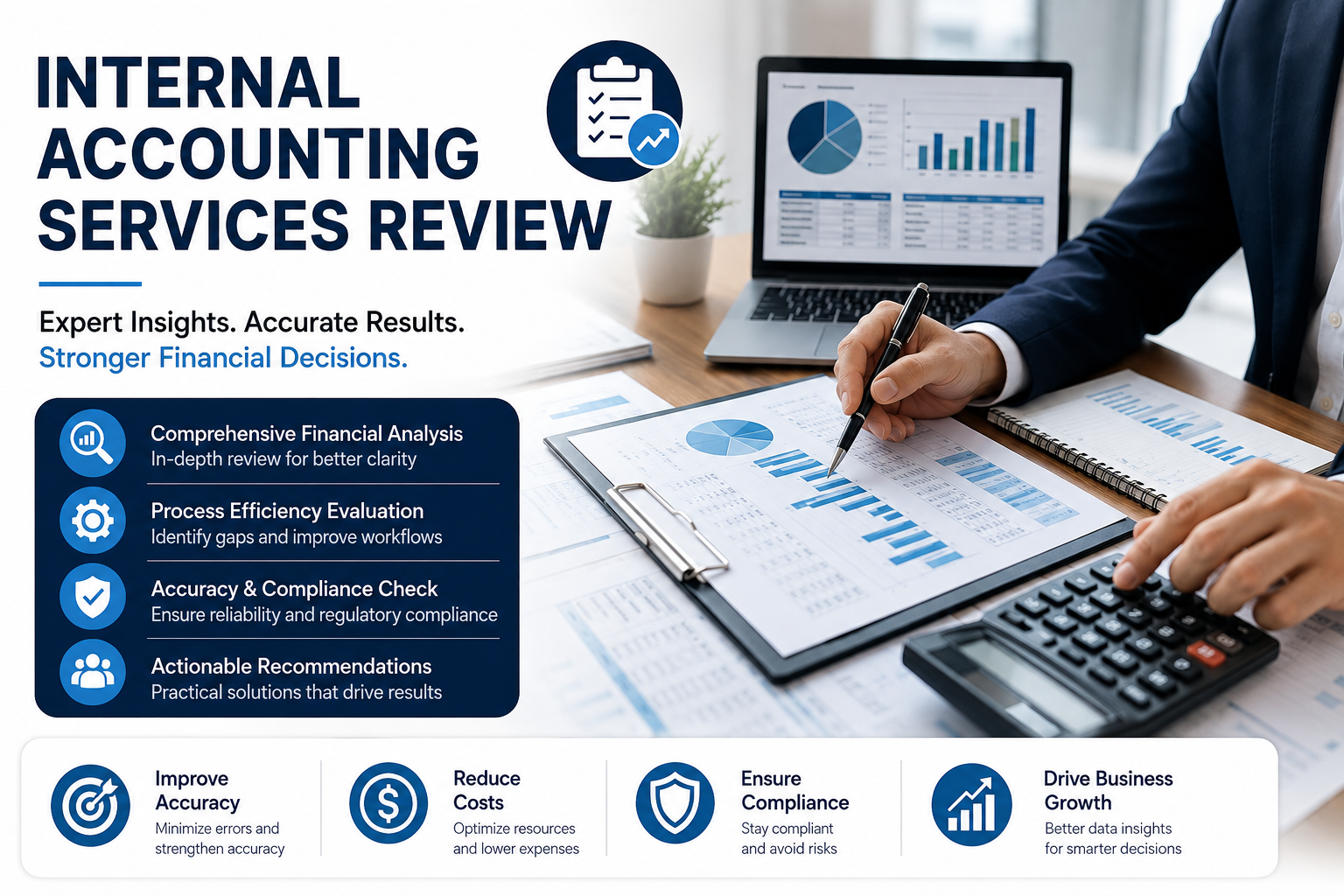
Every successful business depends on reliable financial management to make informed decisions, maintain compliance, and achieve sustainable growth. Whether you operate a small startup, a medium-sized enterprise, or a large corporation, maintaining accurate financial records is one of the most critical aspects of running a profitable organization. This is where Internal Accounting Services become essential.
Internal Accounting Services help businesses monitor daily financial transactions, prepare accurate reports, manage budgets, oversee payroll, maintain tax compliance, and improve overall financial performance. By implementing effective internal accounting processes, organizations gain complete visibility into their financial position while minimizing errors, reducing fraud risks, and ensuring regulatory compliance.
Unlike external accounting, which mainly focuses on statutory reporting and tax filing, Internal Accounting Services emphasize continuous monitoring of financial activities. These services provide business owners and managers with timely financial insights that support strategic planning, operational efficiency, and long-term profitability.
As businesses continue to embrace digital transformation, modern Internal Accounting Services now integrate advanced accounting software, cloud-based solutions, automation, and real-time reporting tools. These innovations enable finance teams to work more efficiently while providing management with valuable financial intelligence.
What Are Internal Accounting Services?
Internal Accounting Services refer to the collection of financial processes, controls, reporting activities, and accounting procedures managed within an organization. Their primary purpose is to ensure that all financial transactions are recorded accurately while providing management with reliable information for decision-making.
These services include maintaining accounting records, reconciling accounts, preparing financial statements, monitoring expenses, managing accounts payable and receivable, payroll processing, budgeting, forecasting, and financial analysis.
Businesses that invest in Internal Accounting Services are better equipped to identify financial opportunities, control operating costs, improve cash flow, and respond quickly to changing market conditions.
Rather than waiting until year-end financial statements are prepared, internal accounting provides continuous financial oversight throughout the year, allowing organizations to make proactive decisions based on current financial data.
Importance of Internal Accounting Services for Modern Businesses
Modern businesses operate in highly competitive markets where financial accuracy can directly impact profitability and long-term success. Even minor accounting mistakes may lead to cash flow problems, compliance penalties, inaccurate reporting, or poor investment decisions.
Internal Accounting Services provide business owners with confidence that financial information remains accurate, organized, and readily available whenever required.
Some of the major reasons businesses rely on internal accounting include:
- Improved financial transparency
- Better operational planning
- Effective cash flow monitoring
- Accurate budgeting
- Regulatory compliance
- Reduced financial risks
- Enhanced profitability
- Better business forecasting
- Improved investor confidence
- Faster financial decision-making
Organizations that maintain efficient Internal Accounting Services are often more resilient during economic uncertainty because management has access to reliable financial information at all times.
Core Functions of Internal Accounting Services
Internal Accounting Services involve numerous financial responsibilities that work together to create a complete financial management system.
Some of the primary functions include:
- General ledger maintenance
- Bookkeeping
- Accounts payable management
- Accounts receivable tracking
- Payroll processing
- Expense management
- Financial reporting
- Budget preparation
- Tax planning support
- Bank reconciliation
- Asset management
- Inventory accounting
- Cash flow analysis
- Internal auditing
- Compliance monitoring
Each of these functions contributes toward maintaining financial accuracy while supporting overall business performance.
Benefits of Internal Accounting Services
Implementing professional Internal Accounting Services offers numerous advantages that extend beyond simple bookkeeping. These services help businesses strengthen financial control while improving overall operational efficiency.
1. Better Financial Accuracy
Accurate accounting records eliminate discrepancies and reduce the likelihood of financial errors. Businesses can trust their financial reports when making important strategic decisions.
2. Stronger Internal Controls
Well-designed internal accounting systems reduce opportunities for fraud, unauthorized transactions, and financial mismanagement.
3. Improved Cash Flow Management
Internal Accounting Services help organizations monitor incoming and outgoing cash, ensuring sufficient liquidity for daily operations.
4. Faster Decision Making
Real-time financial reports enable business leaders to make informed decisions quickly without waiting for year-end statements.
5. Regulatory Compliance
Maintaining proper accounting records ensures businesses comply with accounting standards, tax laws, and government regulations.
6. Cost Reduction
Internal accounting identifies unnecessary expenses, duplicate payments, and inefficient spending patterns, allowing businesses to optimize operational costs.
7. Increased Profitability
Accurate financial data enables companies to improve pricing strategies, monitor profit margins, and maximize overall profitability.
Essential Components of Internal Accounting Services
To deliver accurate business financial management, internal accounting consists of several interconnected components.
Bookkeeping
Bookkeeping forms the foundation of every accounting system. Every transaction must be recorded correctly to ensure accurate financial statements.
Financial Reporting
Regular reports provide insights into business performance through:
- Income Statements
- Balance Sheets
- Cash Flow Statements
- Profit and Loss Reports
- Expense Reports
Payroll Administration
Payroll involves employee salaries, deductions, tax calculations, bonuses, and statutory compliance.
Accounts Receivable
Monitoring customer payments ensures healthy cash flow and reduces overdue invoices.
Accounts Payable
Managing supplier payments on time strengthens vendor relationships while avoiding penalties.
Budget Management
Internal Accounting Services assist organizations in creating realistic budgets that align with business goals.
How Internal Accounting Improves Financial Decision Making
Business leaders rely heavily on financial information when making operational and strategic decisions. Without accurate accounting data, organizations may invest in unprofitable projects or fail to recognize financial risks.
Professional Internal Accounting Services provide detailed financial reports that help management evaluate business performance across every department.
Examples include:
- Departmental profitability analysis
- Revenue growth tracking
- Expense comparison reports
- Cash flow forecasting
- Investment evaluation
- Budget variance analysis
- Cost allocation reports
By analyzing these reports, management can identify opportunities for expansion while addressing areas requiring financial improvement.
Technology's Role in Internal Accounting Services
Technology has significantly transformed Internal Accounting Services. Modern accounting software automates repetitive financial tasks while reducing human error.
Popular accounting technologies include:
- Cloud accounting platforms
- AI-powered bookkeeping
- Automated invoice processing
- Digital expense tracking
- Electronic payment systems
- Financial dashboards
- Business intelligence reporting
- Data analytics tools
Automation enables accounting professionals to focus more on financial analysis rather than manual data entry, improving both productivity and reporting accuracy.
Best Practices for Implementing Internal Accounting Services
Businesses can maximize the value of Internal Accounting Services by adopting standardized accounting procedures and maintaining consistent financial controls. A structured accounting system minimizes risks while ensuring every financial transaction is properly documented.
Some of the best practices include:
- Maintain accurate and updated financial records.
- Perform regular bank reconciliations.
- Separate accounting duties among employees to strengthen internal controls.
- Use cloud-based accounting software for real-time access.
- Review financial statements monthly.
- Conduct internal audits periodically.
- Monitor business expenses continuously.
- Keep supporting documents for every financial transaction.
- Ensure compliance with accounting standards and tax regulations.
- Provide ongoing training to accounting staff.
Following these practices allows Internal Accounting Services to function efficiently while improving transparency across every financial operation.
Common Challenges in Internal Accounting Services
Although Internal Accounting Services provide significant benefits, organizations may face several accounting challenges that require careful management.
Data Entry Errors
Manual bookkeeping can result in incorrect entries, duplicate transactions, and calculation mistakes that affect financial reporting.
Compliance Changes
Accounting regulations and tax laws continue to evolve, requiring businesses to remain updated with the latest compliance requirements.
Cash Flow Problems
Poor receivable management or uncontrolled spending may create liquidity issues despite healthy revenues.
Fraud Risks
Weak internal controls increase the possibility of unauthorized payments, financial manipulation, and employee fraud.
Technology Integration
Implementing new accounting software may require staff training, data migration, and system customization.
Scalability Issues
As organizations grow, their accounting requirements become increasingly complex, making scalable Internal Accounting Services essential.
Internal Accounting Services for Small Businesses
Small businesses often operate with limited financial resources, making efficient accounting even more important. Implementing Internal Accounting Services helps small organizations monitor expenses, maintain cash flow, and prepare for future growth.
Benefits for small businesses include:
- Better expense tracking
- Improved budgeting
- Timely tax preparation
- Reduced accounting mistakes
- Enhanced cash flow visibility
- Simplified payroll processing
- Improved financial planning
- Greater confidence during audits
Even startups can benefit from establishing organized accounting procedures from the beginning to avoid financial complications later.
Internal Accounting Services for Large Enterprises
Large organizations manage thousands of financial transactions every month. Their accounting operations involve multiple departments, locations, currencies, vendors, and compliance requirements.
Internal Accounting Services support enterprise organizations by maintaining financial consistency across all business units.
Enterprise accounting typically includes:
- Consolidated financial reporting
- Department-wise budgeting
- Project accounting
- Fixed asset management
- Inventory accounting
- Cost accounting
- Risk management reporting
- Management reporting
- Financial forecasting
- Performance analytics
These comprehensive accounting functions help executives evaluate organizational performance and improve strategic planning.
Internal Accounting Services and Risk Management
Financial risks exist in every business regardless of industry or size. Effective Internal Accounting Services reduce these risks through continuous monitoring, documentation, and internal controls.
Risk management activities include:
- Monitoring unusual transactions.
- Preventing duplicate payments.
- Reviewing vendor transactions.
- Approving expenditures through proper authorization.
- Protecting confidential financial information.
- Monitoring compliance with internal policies.
- Identifying financial irregularities early.
Businesses with strong internal accounting systems are generally better prepared to respond to financial uncertainties and operational challenges.
How Automation Enhances Internal Accounting Services
Automation has become an essential part of modern Internal Accounting Services. Automated accounting tools reduce repetitive work while improving efficiency and accuracy.
Common automation features include:
- Automatic bank feeds
- Invoice generation
- Expense categorization
- Payroll calculations
- Tax estimation
- Financial dashboards
- Cash flow monitoring
- Real-time reporting
- Budget tracking
- Approval workflows
These technologies save time, minimize manual errors, and provide instant access to financial information.
Future Trends in Internal Accounting Services
The future of Internal Accounting Services continues to evolve with emerging technologies and changing business requirements.
Some important trends include:
- Artificial Intelligence for automated bookkeeping.
- Machine Learning for predictive financial analysis.
- Cloud accounting solutions for remote collaboration.
- Blockchain technology for secure financial transactions.
- Robotic Process Automation (RPA).
- Advanced financial analytics.
- Real-time business intelligence dashboards.
- Integrated ERP accounting systems.
- Paperless accounting documentation.
- Enhanced cybersecurity for financial records.
Organizations that adopt these innovations will improve operational efficiency while strengthening financial decision-making capabilities.
Conclusion
Internal Accounting Services are essential for organizations seeking financial stability, operational efficiency, and long-term success. They provide the foundation for accurate bookkeeping, reliable financial reporting, effective budgeting, payroll management, regulatory compliance, and strategic planning.
Whether managing a startup, a growing business, or a multinational enterprise, investing in professional Internal Accounting Services enables organizations to maintain complete financial transparency while reducing risks and improving profitability. Accurate financial information empowers business owners and executives to make informed decisions that support sustainable growth.
As technology continues to reshape the accounting industry, businesses that embrace automation, cloud accounting, advanced analytics, and strong internal controls will be better positioned to achieve financial excellence. Ultimately, Internal Accounting Services are not merely about recording transactions—they are about building a reliable financial framework that drives business success, strengthens stakeholder confidence, and supports future expansion.
Frequently Asked Questions (FAQs)
1. What are Internal Accounting Services?Internal Accounting Services are financial management functions performed within an organization to record, monitor, analyze, and report financial activities accurately.
2. Why are Internal Accounting Services important for businesses?They improve financial accuracy, support decision-making, ensure regulatory compliance, strengthen internal controls, and enhance business profitability.
3. What services are included in Internal Accounting Services?They typically include bookkeeping, payroll management, accounts payable, accounts receivable, budgeting, forecasting, financial reporting, bank reconciliation, tax support, and internal auditing.
4. How do Internal Accounting Services improve cash flow?They monitor incoming and outgoing payments, track receivables, manage expenses, and provide cash flow reports that help businesses maintain healthy liquidity.
5. Can small businesses benefit from Internal Accounting Services?Yes. Small businesses can improve budgeting, reduce accounting errors, manage expenses effectively, and make informed financial decisions.
6. What is the difference between internal accounting and external accounting?Internal accounting focuses on daily financial management and operational reporting, while external accounting primarily handles statutory reporting, audits, and tax compliance for external stakeholders.
7. How does technology improve Internal Accounting Services?Technology automates bookkeeping, payroll, reporting, bank reconciliation, and financial analysis, reducing manual errors while improving efficiency.
8. What are the biggest challenges in Internal Accounting Services?Common challenges include maintaining data accuracy, adapting to regulatory changes, preventing fraud, managing cash flow, and integrating new accounting technologies.
9. How often should financial reports be reviewed?Most businesses should review financial reports monthly, while larger organizations may monitor key financial metrics weekly or even daily.
10. Why are Internal Accounting Services important for long-term business growth?They provide accurate financial insights, improve planning, reduce risks, optimize operational efficiency, support informed decision-making, and create a strong financial foundation for sustainable business growth.