
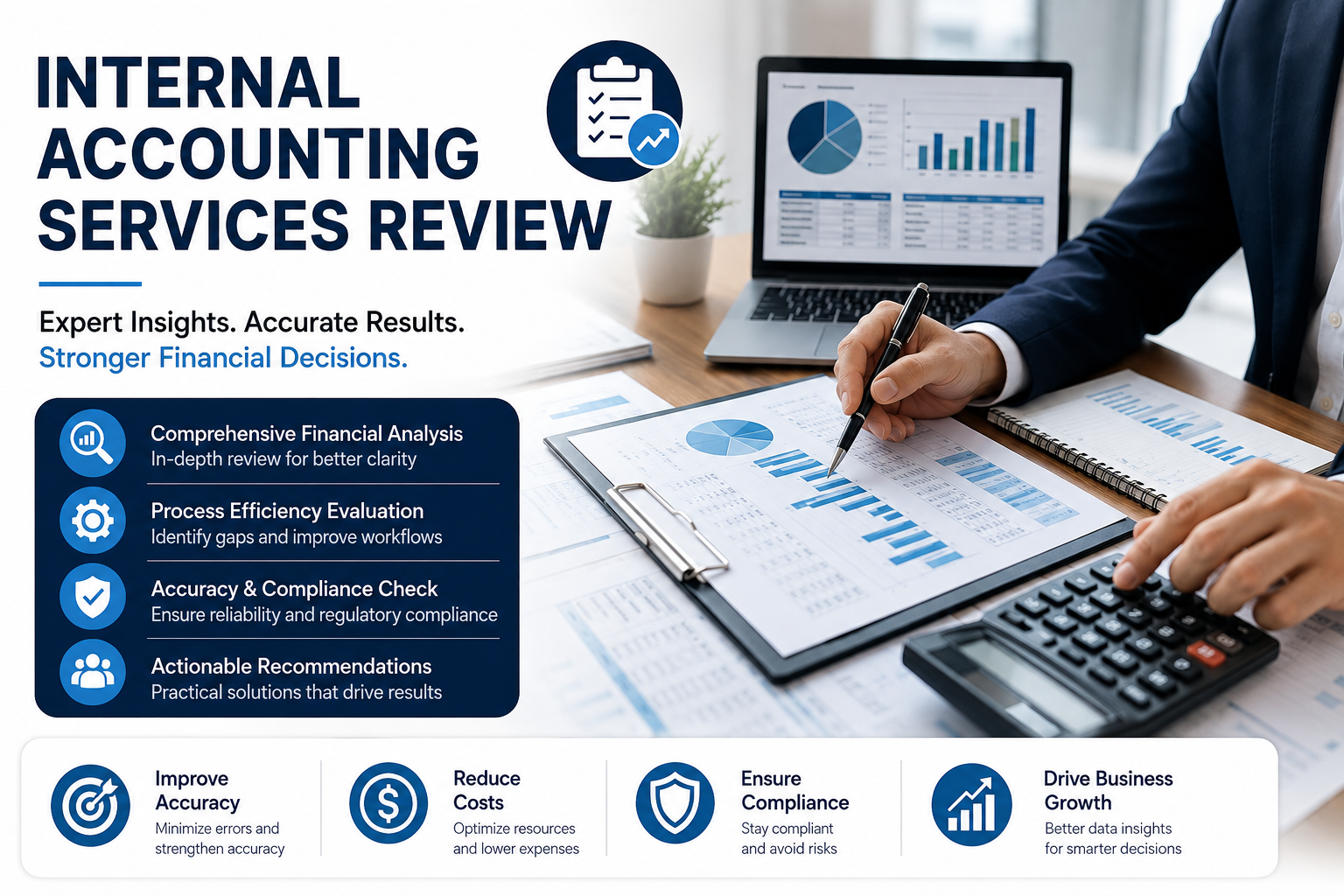
Effective financial management is one of the most important factors behind long-term business success. Companies need accurate financial records, organized reporting, controlled expenses, timely reconciliations, and reliable financial information to make confident decisions. This is where Internal Accounting Services can provide significant value. Instead of treating accounting as only a record-keeping function, businesses can use Internal Accounting Services to create a structured financial management system that supports planning, efficiency, compliance, and sustainable growth.
Internal Accounting Services can cover a broad range of activities, including bookkeeping, accounts payable, accounts receivable, bank reconciliation, financial reporting, budgeting support, payroll accounting, expense monitoring, and financial data organization. When these activities are managed consistently, business owners and management teams can gain a clearer understanding of their financial position and use reliable information to guide important decisions.
What Are Internal Accounting Services?
Internal Accounting Services refer to accounting functions managed within a business or through a dedicated accounting support structure working closely with the organization. These services are designed to maintain accurate financial records and ensure that financial information is available when management needs it.
Depending on the size and requirements of a company, Internal Accounting Services may include daily transaction recording, invoice management, payment tracking, reconciliation, payroll-related accounting, financial statement preparation, cash-flow monitoring, and management reporting. The objective is to establish a dependable financial process that helps businesses understand their income, expenses, assets, liabilities, and overall financial performance.
Unlike a limited bookkeeping approach, comprehensive Internal Accounting Services can become an important part of a company's overall financial management strategy. They help connect routine accounting activities with broader business objectives.
Why Internal Accounting Services Matter for Businesses
Financial information influences almost every major business decision. Whether a company is considering hiring employees, purchasing equipment, expanding operations, launching a new service, or reducing expenses, accurate accounting information is essential.
Internal Accounting Services help businesses maintain organized financial information so management does not have to make important decisions based on incomplete or outdated records. Consistent accounting processes also reduce the possibility of overlooked transactions, duplicate entries, inaccurate reports, and unexplained financial discrepancies.
Another important benefit is improved financial visibility. With properly maintained records, businesses can monitor revenue trends, operating costs, outstanding invoices, available cash, and other important financial indicators. This visibility allows management to identify potential problems earlier and respond more effectively.
Improving Financial Record Accuracy
Accurate financial records are the foundation of effective accounting. Even small errors can create problems when they accumulate over time. Incorrect transaction classifications, missing invoices, unreconciled accounts, or duplicate entries can affect financial statements and management decisions.
Internal Accounting Services establish regular procedures for recording and reviewing financial transactions. Routine reconciliation and transaction verification can help identify discrepancies before they become larger problems.
Accurate records also make it easier to prepare financial statements and provide financial information to authorized stakeholders. When accounting data is consistently maintained, businesses can spend less time searching for missing information and more time analyzing their financial performance.
Better Cash Flow Management
Cash flow is a critical concern for businesses of every size. A profitable company can still experience financial pressure if cash is not managed properly. Businesses need to understand when money is expected to come in and when payments are due.
Internal Accounting Services can support cash-flow management by monitoring accounts receivable, accounts payable, recurring expenses, customer payments, and upcoming financial obligations. Regular reporting can help management identify periods when cash may become limited.
Better cash-flow visibility can also support more informed payment scheduling and budgeting. Instead of reacting to financial shortages, businesses can use accounting information to plan ahead and manage available resources more carefully.
Strengthening Accounts Payable and Receivable Processes
Accounts payable and accounts receivable directly affect a company's financial health. Delayed customer payments can reduce available cash, while poorly managed vendor payments can result in missed deadlines or unnecessary administrative complications.
Internal Accounting Services can help organize invoice processing, payment tracking, customer balances, vendor records, and follow-up procedures. A structured process makes it easier to identify overdue invoices and monitor outstanding obligations.
When accounts receivable and payable are properly coordinated, businesses can improve financial visibility and maintain healthier relationships with customers and suppliers.
Supporting Smarter Business Decisions
Business decisions should ideally be supported by reliable financial information. Management may need to determine whether a particular product is profitable, whether operating expenses are increasing, or whether the company can afford a planned investment.
Internal Accounting Services provide the financial information required for these evaluations. Regular reports can help management compare revenue and expenses, identify trends, review budgets, and evaluate financial performance.
For example, if operating expenses increase significantly over several months, accounting reports can help management investigate the cause. Similarly, if revenue from a specific business activity declines, financial information can encourage management to review pricing, demand, costs, or operational processes.
Internal Accounting Services and Budget Planning
Budgeting becomes more effective when it is based on accurate historical financial information. Businesses can use previous revenue and expense data to establish realistic financial expectations for upcoming periods.
Internal Accounting Services can support budget preparation by organizing historical financial data, monitoring actual performance, and comparing results against planned figures. These comparisons can show where the business is exceeding or falling below expectations.
Regular budget reviews also allow management to adjust plans when business conditions change. Instead of creating a budget once and ignoring it, companies can use accounting information as an ongoing planning tool.
Enhancing Financial Reporting
Financial reports provide management with a structured view of business performance. Common reports may include income statements, balance sheets, cash-flow reports, accounts receivable aging reports, accounts payable reports, and expense summaries.
Internal Accounting Services can help ensure these reports are prepared from organized and reconciled financial information. Clear reporting makes it easier for decision-makers to understand financial results without reviewing individual transactions manually.
Customized management reports can also focus on the financial indicators most relevant to a particular organization. This may include departmental expenses, project profitability, sales performance, operating margins, or cash availability.
Reducing Financial Risks
Financial risks can arise from inaccurate records, unauthorized transactions, weak documentation, missed payments, poor expense control, or insufficient financial monitoring. A structured accounting process can reduce exposure to many of these risks.
Internal Accounting Services can incorporate review procedures, account reconciliations, transaction documentation, approval processes, and regular reporting. Separating responsibilities where appropriate can also help create stronger internal controls.
These practices do not eliminate every financial risk, but they can improve accountability and make unusual transactions or discrepancies easier to identify.
Supporting Business Growth and Scalability
Accounting requirements often become more complicated as a business grows. More customers, employees, suppliers, transactions, locations, and business activities can create additional financial administration.
Internal Accounting Services can provide a structured foundation that grows alongside the organization. Standardized accounting procedures can make it easier to handle increasing transaction volumes without losing financial visibility.
Scalable accounting processes are particularly valuable when a company enters new markets, introduces additional products, expands its workforce, or develops multiple revenue streams. Strong financial organization can help management maintain control while the business becomes more complex.
Improving Expense Management
Uncontrolled expenses can reduce profitability even when revenue is increasing. Businesses therefore need a clear understanding of where money is being spent and whether those expenses support organizational goals.
Internal Accounting Services can help categorize and monitor expenses, making it easier to identify unusual spending patterns and recurring costs. Management can use this information to evaluate expenses and determine where improvements may be appropriate.
Expense monitoring can also support better budgeting. When businesses understand their historical spending patterns, they can develop more realistic financial plans and establish appropriate spending controls.
Technology and Internal Accounting Services
Modern accounting processes increasingly rely on accounting software, cloud-based systems, automated reporting, digital invoicing, and electronic documentation. Technology can reduce manual work while improving access to financial information.
Internal Accounting Services can make effective use of technology by establishing organized workflows for transaction entry, reconciliation, reporting, invoicing, and financial documentation. Automation can help reduce repetitive tasks, while human review remains important for accuracy and appropriate financial judgment.
Businesses should select technology based on their specific accounting requirements, transaction volume, security needs, reporting expectations, and future growth plans.
How Internal Accounting Services Improve Financial Efficiency
Financial efficiency is not simply about reducing accounting costs. It also involves reducing unnecessary manual work, improving processes, preventing errors, and ensuring that financial information is available when required.
Internal Accounting Services can create standardized procedures for common accounting tasks. Clear workflows help employees understand responsibilities and reduce confusion about who handles invoices, payments, reconciliations, reporting, and documentation.
Efficient accounting processes can also reduce the amount of time management spends resolving basic financial issues. This allows business leaders to focus more attention on operations, customers, strategic planning, and growth.
Choosing the Right Internal Accounting Services
Businesses should evaluate their accounting requirements before selecting an Internal Accounting Services approach. The right solution depends on company size, transaction volume, industry requirements, financial complexity, reporting needs, and growth plans.
Important factors to consider include the range of services offered, accounting expertise, technology capabilities, reporting processes, communication standards, documentation practices, and data security procedures.
A suitable accounting structure should provide accurate information while remaining flexible enough to adapt as business requirements change. Companies should also establish clear expectations regarding responsibilities, deadlines, reporting frequency, and review procedures.
Best Practices for Effective Internal Accounting Services
Businesses can improve the effectiveness of Internal Accounting Services by following consistent accounting practices. Regular account reconciliation should be performed to identify discrepancies. Financial records should be organized and supported by appropriate documentation.
Businesses should also establish clear approval procedures for expenses and payments. Access to accounting systems should be controlled according to employee responsibilities. Regular financial reporting should be provided to management so that financial performance can be reviewed throughout the year.
Another important practice is continuous process improvement. Accounting workflows should be reviewed periodically to identify repetitive tasks, unnecessary steps, reporting gaps, and opportunities for automation.
Internal Accounting Services for Long-Term Business Success
Strong accounting is more than a compliance requirement. It can become a strategic business resource. When financial information is accurate, organized, and accessible, management can make decisions with greater confidence.
Internal Accounting Services can help create this foundation by combining accurate recordkeeping, financial reporting, expense monitoring, cash-flow visibility, and structured accounting procedures. These services can support both day-to-day operations and long-term strategic planning.
Businesses that invest in dependable financial processes are better positioned to understand their performance, manage resources, identify financial challenges, and pursue growth opportunities responsibly.
FAQs About Internal Accounting Services
What are Internal Accounting Services?
Internal Accounting Services are accounting functions that support a company's financial operations, including bookkeeping, reconciliations, accounts payable, accounts receivable, reporting, expense tracking, budgeting support, and other financial management activities.
How can Internal Accounting Services help a growing business?
Internal Accounting Services can help growing businesses maintain accurate records, monitor cash flow, control expenses, organize financial reporting, and establish accounting processes that can scale with increasing business activity.
Can Internal Accounting Services improve cash-flow management?
Yes. Internal Accounting Services can provide better visibility into customer payments, vendor obligations, recurring expenses, and available cash, helping management plan financial resources more effectively.
Why are accurate financial records important?
Accurate financial records help businesses understand their financial position, prepare reliable reports, monitor performance, support budgeting, and make informed business decisions. They can also make it easier to identify discrepancies and financial trends.
Do Internal Accounting Services support business decision-making?
Yes. Internal Accounting Services provide financial information that management can use when evaluating expenses, profitability, investments, budgets, cash flow, and growth opportunities.
How often should accounting records be reviewed?
The appropriate review frequency depends on the size and complexity of the business. Many organizations benefit from regular transaction reviews and reconciliations, along with monthly financial reporting and periodic assessments of accounting processes.
Are Internal Accounting Services suitable for small businesses?
Yes. Small businesses can benefit from Internal Accounting Services because organized accounting processes can improve financial visibility, support budgeting, monitor cash flow, and provide a stronger foundation for future growth.
What should businesses consider when selecting Internal Accounting Services?
Businesses should consider accounting expertise, service scope, reporting capabilities, technology, communication, data security, scalability, process controls, and the organization's specific financial requirements before selecting an Internal Accounting Services solution.
Can technology improve Internal Accounting Services?
Accounting technology can streamline transaction processing, invoicing, reconciliation, documentation, and reporting. When combined with appropriate human review and internal controls, technology can make Internal Accounting Services more efficient and organized.
Conclusion
Internal Accounting Services can play an important role in creating smarter and more organized business financial management. From maintaining accurate records and monitoring cash flow to supporting budgeting, reporting, expense control, and business decisions, effective accounting processes provide valuable financial visibility.
The most successful approach is to view Internal Accounting Services as an ongoing business function rather than simply an administrative task. With reliable processes, appropriate technology, strong internal controls, and regular financial reviews, businesses can improve efficiency and make better-informed decisions.
Whether a company is growing rapidly or seeking greater control over its existing operations, well-structured Internal Accounting Services can provide the financial foundation needed for sustainable performance and smarter management.